Public-site audit sample · Independently prepared by MAXUOD, not commissioned client work.
The starting point
An industrial buyer needs to move from an application to a suitable product, then verify the specification before making an enquiry. We reviewed how RMO Bearings’ public catalogue supported that journey and which issues deserved attention first.
What we reviewed
Crawled the public HTML, including all 438 sitemap URLs, and reviewed status codes, canonical links, titles and descriptions.
Cross-checked the sitemap URLs with an independent crawler and compared product, category and industry information.
Rechecked category pagination through public requests and an actual next-page click.
What we found
Archived website screenshots sit beside the findings they support. Each image has its own capture date; the live pages may have changed. Select an image to open the full-size evidence in a new tab.
Five category pagination URLs redirected to the general product directory. A buyer following those links lost the category they had been browsing.
The October 19 request check recorded 301 redirects to /products/ for five category pagination URLs: bearing pulleys, needle roller, roller, linear and ball bearings.
Ball-bearing pages 2 and 4 returned 200 in the same check, while page 3 redirected. That pattern called for checking specific redirect rules before removing pagination.
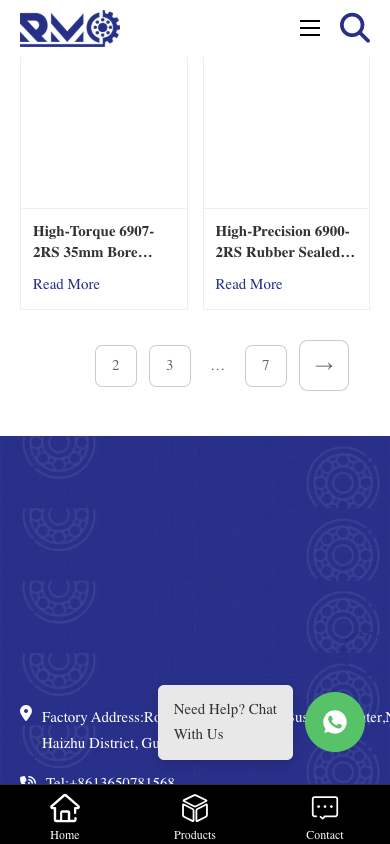
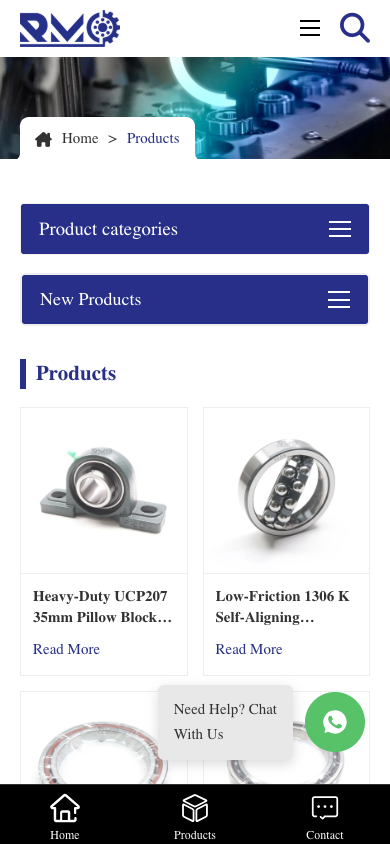
Before the click: the Ball Bearings category offered page 3 in its pagination.Captured October 23, 2026 · Follow-up check · Open full size ↗After selecting page 3: the general Products directory opened. This compares a navigation step, not a repair.Captured October 23, 2026 · Follow-up check · Open full size ↗
The screenshots show one browser journey from the October 23 follow-up. The five-URL count and HTTP status codes come from the archived October 19 request checks, not from the images alone.
Why it matters
For buyers. The category selection is lost at the next-page step. A buyer must start again in the full catalogue or look for another way to find the remaining products.
For search. A link that redirects to the general directory does not expose the intended category page through that path. This can weaken discovery of its remaining products; it does not prove that those products are absent from Google.
Check the redirect rules against the valid category pages, restore the intended destinations, then verify the next-page journey and crawl the links again.
How to check it. Click each affected next-page link from its category. Valid pages should return 200, keep the category and show the correct next set of products, with a canonical for that page. Remove an invalid page only after confirming that it has no content.
Material descriptions differed between some category and product pages. FR8ZZ width specifications also differed across pages, leaving the correct specification unclear from the website alone.
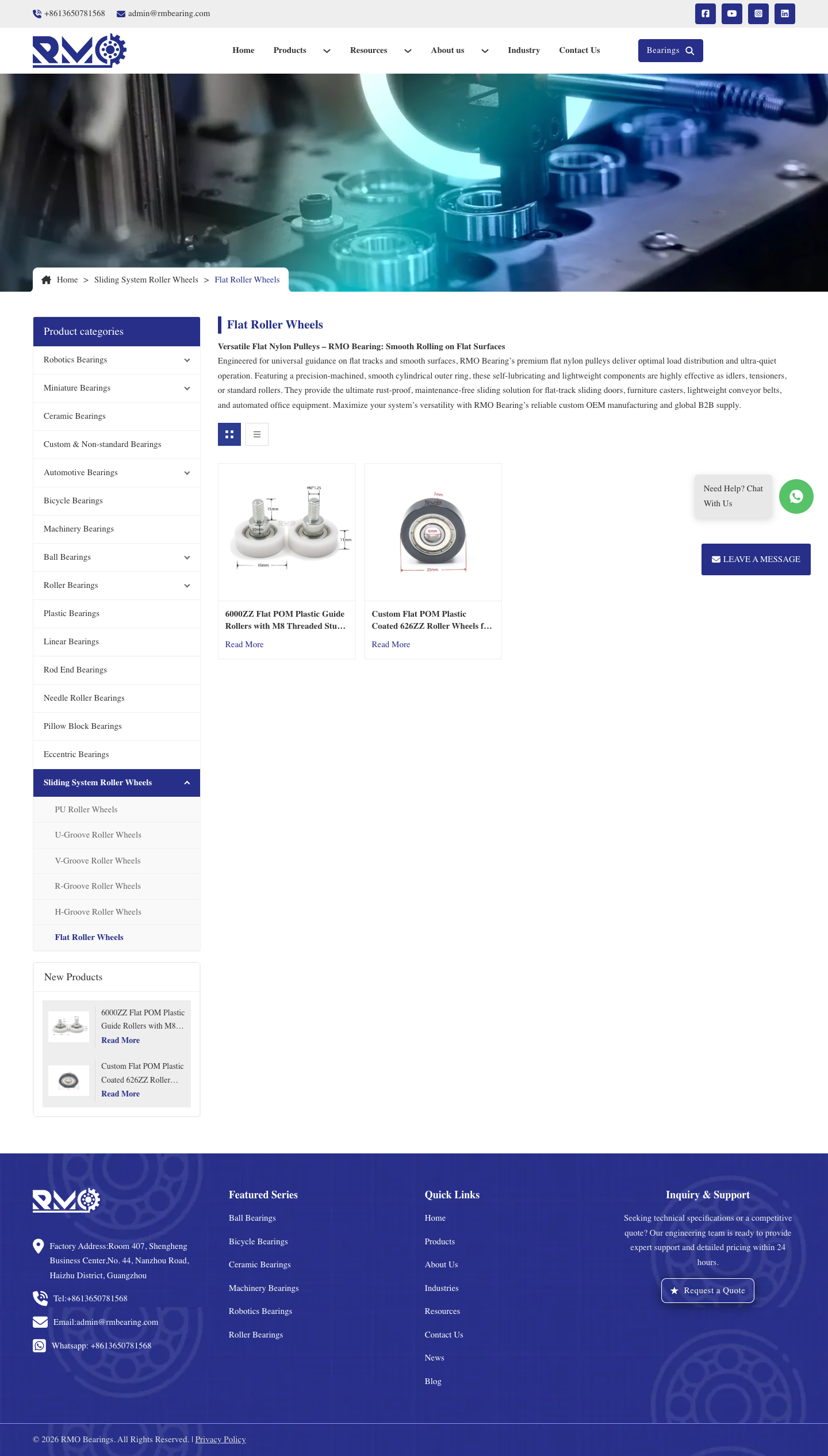
The Flat Roller category introduction described nylon, while product cards on the same page named POM. The page did not explain whether the introduction applied to only part of the range.
The audit also recorded material differences in the V-Groove category and conflicting FR8ZZ width values. A drawing or engineering confirmation is needed to decide the correct specification.
The category introduction described nylon pulleys, while both visible product cards named POM rollers.Captured October 18, 2026 · Open full size ↗
This screenshot supports the Flat Roller material mismatch. The other material and width observations are recorded in the audit; they are not visible in this image.
Why it matters
For buyers. Material and dimensions affect whether a bearing is suitable. Conflicting details add a clarification step before a buyer can compare models or request an accurate quote.
For search. Different descriptions leave multiple versions of a product fact available for indexing or summarization. Clear, consistent wording gives search systems and readers less ambiguity; no ranking penalty was measured.
Have an engineer confirm the current drawings and specifications, then use the same verified details across category, product and guide pages while preserving the existing URLs.
How to check it. Compare every revised material and dimension against the approved specification. Check the category introduction, product title, specification table and linked guide together, and label real variants rather than forcing unlike products into one description.
The body content of eight industry pages lacked direct links to specific categories or models. The related-product blocks on 357 product pages repeated the same ten destinations.
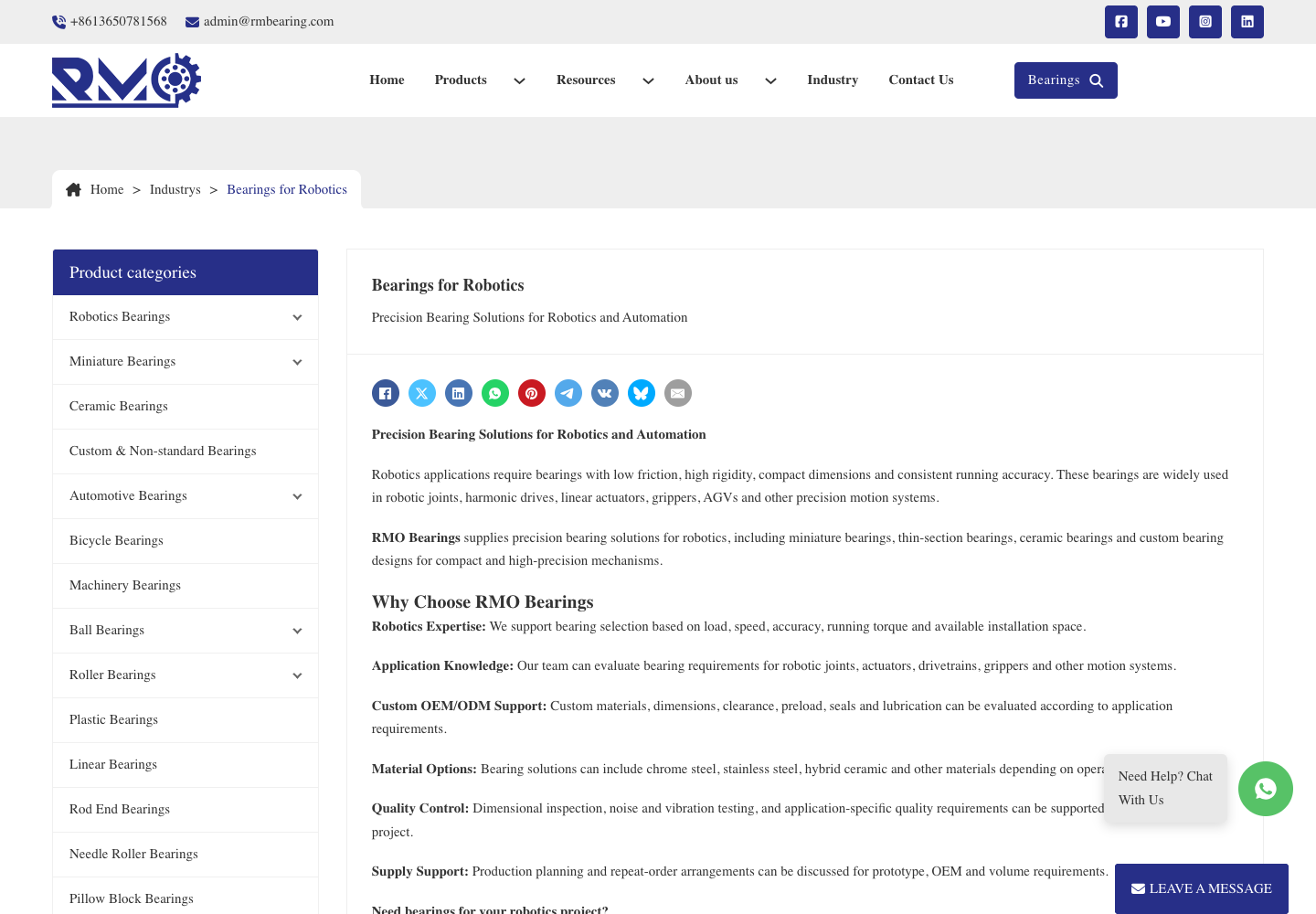
The Robotics page offered application information, but its main body did not connect those use cases to specific bearing families or models. General navigation and sidebar links are separate from those contextual recommendations.
Across the product crawl, the related-product blocks repeated ten destinations instead of reflecting the product currently being viewed.
The Robotics page described applications and capabilities. The sidebar supplied general category navigation; the audit checked the main body separately for relevant product links.Captured October 18, 2026 · Open full size ↗
The image shows one industry-page example. The counts of eight industry pages and 357 product pages come from the archived HTML and link analysis.
Why it matters
For buyers. A buyer can understand an application but still has to translate it into a product choice alone. Repeated suggestions offer limited help when the relevant size, material or use is different.
For search. Links from relevant application text can provide another discovery path and explain the relationship between a use and a product. Missing these paths is an opportunity to improve navigation, not proof that the products cannot be crawled.
Recommended fix
Connect application guidance to relevant product families and make related-product choices reflect the use, dimensions and material of the item being viewed.
How to check it. Follow each application recommendation to an appropriate live category or product. Sample products from different families and confirm the related items change meaningfully; retain descriptive anchor text and remove broken or irrelevant destinations.
Where we would start
Repair the category pagination so buyers can continue their selection.
Confirm conflicting specifications before updating the product content.
Build useful paths from industry pages to product families, then tidy priority-page descriptions and headings.
What the audit delivered
The work produced a three-page Chinese audit report, a prioritized repair sequence and a separate pagination diagnosis with acceptance checks. The report translated crawl findings into specific work an owner and developer could review.
The impact explanations above describe plausible effects of the documented issues. They are not measurements of lost rankings, clicks, AI citations or enquiries.
These findings describe the October 18–19 audit snapshot. No changes were made to the website. Search Console, analytics and sales data were outside the review, so the case does not claim indexation, ranking, traffic or enquiry gains.
What needs attention on your site?
Start with your website and the market you want to reach. We’ll recommend three priorities.