
Get a free SEO audit of your website.
Not sure why people struggle to find you, or what to fix first? Get three recommended changes, the page evidence behind each, and a practical first step. A person reviews your website before we send the recommendations.
For businesses reaching customers in Canada and the US. We work remotely from Halifax.
Just your email and public website to start. No payment, login or required sales call.
Your audit contact is Deeyoung Ma, from the first review to any agreed follow-up work.
We’ll reply within one business day to confirm your request and the next step.
Tell us what you need.
Loading the request form. You can also email info@maxuod.com.
From search intent to a useful page.
A condensed sample from the October 18–19, 2026 RMO Bearings review. It connects keyword planning, contextual internal links and category discovery to specific page decisions.
Keyword mapGive each keyword group a clear destination.
Proposed mapping, not measured demand. These terms were derived from the existing website. Search volumes, rankings and query–page performance were not available.
- Supplier selectionminiature ball bearing manufacturer
- Proposed primary page
/product/miniature-bearings/Explain the range, specification differences and sample-order conditions.
- Proposed internal-link path
Miniature ball bearings guide → category → relevant models.
- Model and procurementFR8ZZ hex bore bearing
- Proposed primary page
/products/fr8zz-hex-bore-bearing-frc-robotics/Confirm the conflicting dimensions with an engineer before aligning the copy and drawings.
- Proposed internal-link path
FRC Bearings category → FR8ZZ model page.
- Comparison and selectionZZ vs 2RS bearings
- Proposed primary page
/open-vs-zz-vs-2rs-bearings/Connect sealing trade-offs to real operating conditions and verified model choices.
- Proposed internal-link path
Comparison guide → suitable existing products, once compatibility is confirmed.
What we would validate next
Confirm the products and buyers that matter, review the results for each query group, then compare query–page data in Search Console if access is agreed. Check which URL best answers the task before rewriting, combining or adding pages. Multiple URLs appearing for a query is a reason to investigate, not proof of harmful keyword cannibalization.
How keyword groups become a page and internal-link planInternal linksBuild internal links around product selection.
Observed in the audit
The body content of eight industry pages lacked direct links to specific categories or models. The related-product blocks on 357 product pages repeated the same ten destinations.
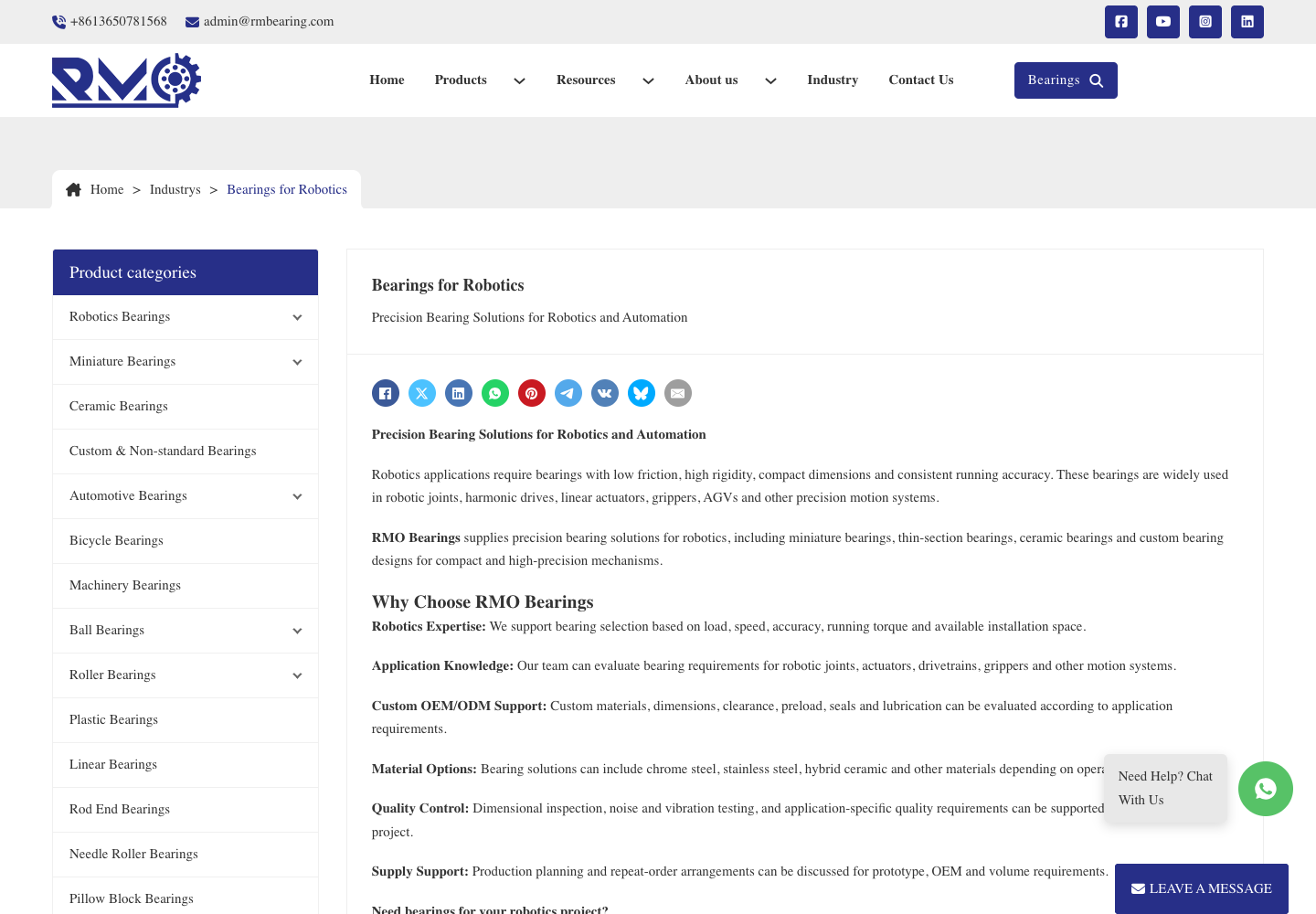
The image shows one industry-page example. The counts of eight industry pages and 357 product pages come from the archived HTML and link analysis.
See the complete evidence and affected pages- Search and discovery impact
- Links from relevant application text can provide another discovery path and explain the relationship between a use and a product. Missing these paths is an opportunity to improve navigation, not proof that the products cannot be crawled.
- Recommended change
- Connect application guidance to relevant product families and make related-product choices reflect the use, dimensions and material of the item being viewed.
- How to verify it
- Follow each application recommendation to an appropriate live category or product. Sample products from different families and confirm the related items change meaningfully; retain descriptive anchor text and remove broken or irrelevant destinations.
Page discoveryKeep the category’s next page reachable.
Observed in the audit
Five category pagination URLs redirected to the general product directory. A buyer following those links lost the category they had been browsing.
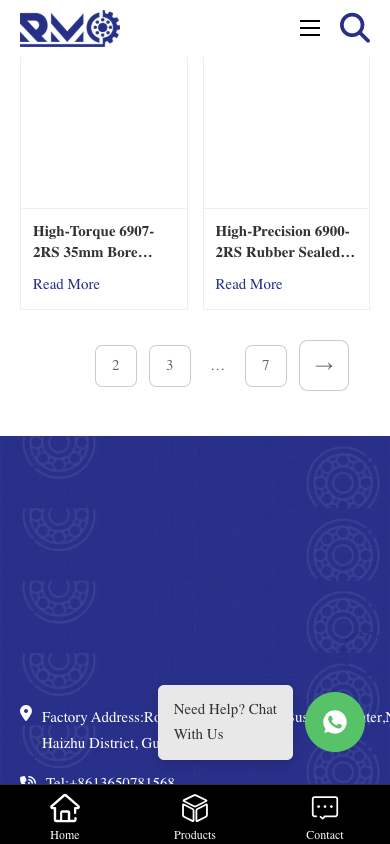
The screenshots show one browser journey from the October 23 follow-up. The five-URL count and HTTP status codes come from the archived October 19 request checks, not from the images alone.
See the complete evidence and affected pages- Search and discovery impact
- A link that redirects to the general directory does not expose the intended category page through that path. This can weaken discovery of its remaining products; it does not prove that those products are absent from Google.
- Recommended change
- Check the redirect rules against the valid category pages, restore the intended destinations, then verify the next-page journey and crawl the links again.
- How to verify it
- Click each affected next-page link from its category. Valid pages should return 200, keep the category and show the correct next set of products, with a canonical for that page. Remove an invalid page only after confirming that it has no content.
An independent public-site review, not commissioned client work. The keyword map was proposed; the link findings were observed. No website changes or ranking, traffic or enquiry improvements were measured.
What your free SEO audit covers
Search visibility and technical SEO. We look at how important pages can be found, including crawl controls, canonical URLs, sitemaps and redirects. If you choose to share Search Console access, we can also review its search and indexing data.
Keywords and page purpose. We consider the questions customers may ask and which existing page should answer each one. Search Console data, when available, helps us compare those ideas with the queries already showing your pages.
Internal links and enquiries. We follow the links between relevant guides, services and products, then look at whether a visitor can find a clear next step.
For example, in our public-site review of SilkyFun Hair, a question about working with hair brands was answered with terms for returning customised jerseys. We recommended replacing unrelated answers with supplier-approved details. See the finding and screenshot.
We start with your public website. Share the market you want to reach and, if you like, what is bothering you about the site.
What happens after you ask?
What happens after I send my website?
We reply within one business day to confirm your request or ask a follow-up question. That first reply is not the finished audit. We then review your site and explain three recommended changes, why they matter and where to start.
Is this an automatic scan?
We use tools to inspect your public pages, then a person reviews the findings. You receive three recommendations, the reasons behind them and a first step. Implementation is a separate project that you can do yourself or discuss with us.
Do I need to buy anything or leave a review?
No. You do not have to buy a plan, leave a public review or give us permission to publish a case study to receive the free audit. Honest feedback is welcome, but optional. Keep the recommendations, whichever path you choose.
What does the AI search part cover?
We review whether your public pages clearly explain the business, answer useful customer questions and connect readers to the right service. The first review focuses on your website; ongoing AI search monitoring can be discussed separately.