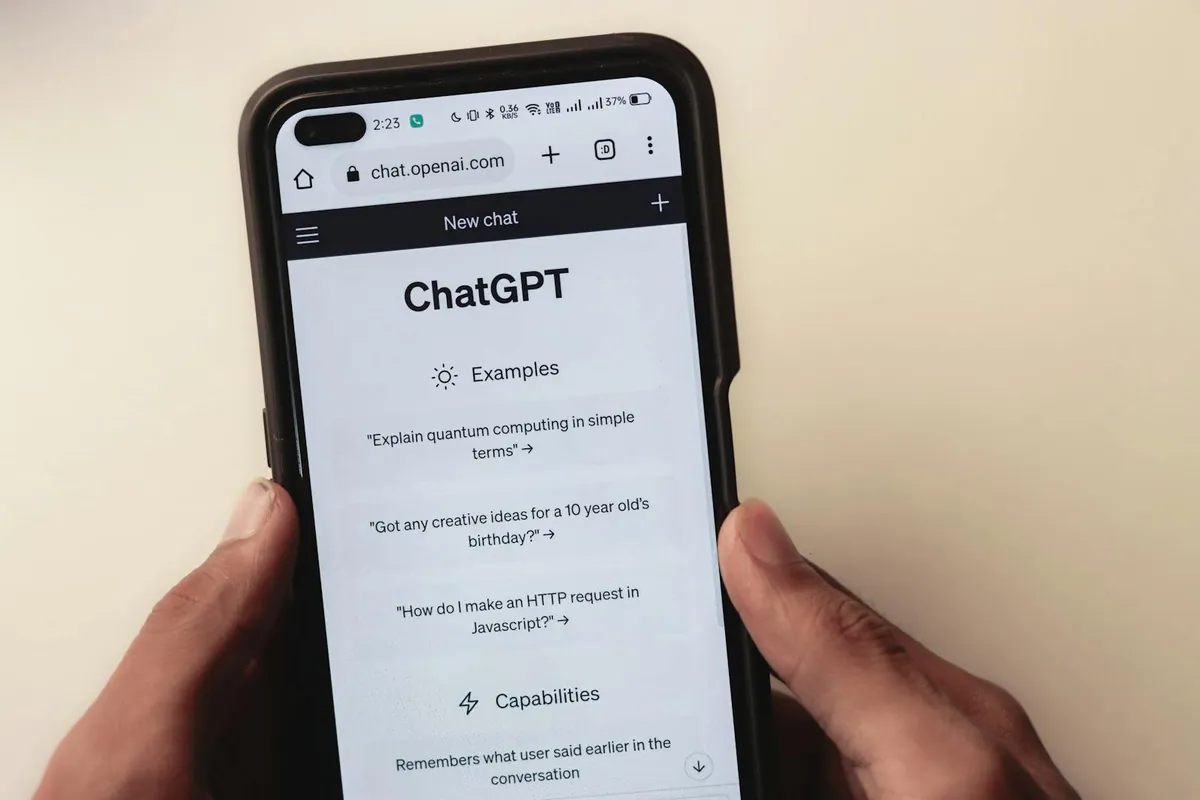
Generative Engine Optimization, or GEO, is the operating work that makes a business easier for AI-powered search systems to retrieve, interpret, cite, and describe accurately. It combines established SEO, clear entity and service information, useful source-backed content, consistent public references, distribution, and disciplined measurement. It does not replace SEO, and it does not guarantee a recommendation.
A website can rank for a useful query and still be absent from an AI answer. It can also earn a citation while the answer gets the service area, price, or business model wrong. That is why a workable GEO programme must examine more than visibility. It needs to ask whether the right source was eligible, whether the answer was accurate, and whether the cited page helped a buyer take a sensible next step.
GEO is a visibility discipline, not a second search engine
The term became prominent after the 2023 research paper GEO: Generative Engine Optimization studied methods for improving source visibility in generated responses. That work is useful as a research foundation, but its benchmark results should not be treated as a universal traffic forecast for a live Canadian business.
In day-to-day work, GEO is better understood as a layer across existing systems. Search engines and answer engines still need accessible pages. They still need enough context to understand what a business does. They still benefit from specific claims with evidence. The difference is that an answer may combine several sources, hide the conventional result list, or cite a page without sending a visit.
The useful model starts before someone types a prompt
Begin with the chain that makes an answer possible. A page must be discoverable and allowed to appear in the relevant search experience. Its visible content must state the service, audience, location, limitations, and proof clearly enough to survive extraction. Important business facts should agree across the website, profiles, directories, reviews, and reputable publications. Only then does prompt monitoring become a meaningful diagnostic.
- Eligibility: the page can be crawled, indexed where required, rendered, and shown with a useful snippet.
- Interpretation: headings, body copy, structured data, images, and links describe the same real offer.
- Corroboration: first-party and independent sources do not contradict the core business facts.
- Retrieval: a platform selects the page or another reliable source for a relevant question.
- Outcome: the resulting mention, citation, visit, or enquiry is measured as its own event.
This sequence exposes weak diagnoses. If a service page is excluded from indexing, another FAQ will not solve the eligibility problem. If an assistant quotes an old directory listing, the next job is source correction. If a good article earns citations but has no useful route to a service or audit, the issue is the conversion path.
A citation can still produce an inaccurate answer
A citation proves that a source was surfaced in one observed response. It does not prove that every sentence in the answer came from that source, that the platform interpreted it correctly, or that the same answer will appear for another user. AI systems may combine several pages, infer missing details, or select a third-party description instead of the business's preferred wording.
Review important answers as evidence, not applause. Record the exact prompt, platform, mode, location, date, account context, cited URLs, named alternatives, and whether the description is accurate. Save enough of the response to reproduce the finding without publishing private account or performance information.
The phrase agent-source-trust is useful for describing the consistency an autonomous research agent encounters across sources. We treat it as an industry framework, not an official Google or Microsoft ranking factor. The practical question is sound: if an agent cross-checks a website, local profile, review site, directory, and publication, do the service facts agree?
SEO, AEO, GEO, and AIO describe overlapping work
The labels are less important than assigning ownership. We use them only when they clarify which surface or failure is being addressed.
| Label | Useful meaning | Typical work | What it cannot promise |
|---|---|---|---|
| SEO | Visibility in organic search and the foundations that support it | Crawling, indexing, page ownership, content, links, local signals, and measurement | A stable position or guaranteed click volume |
| AEO | Making a direct question easy to answer from a reliable page | Clear definitions, concise answer blocks, supporting detail, and evidence | A featured result or citation for every question |
| GEO | Improving accurate retrieval and representation in generated answers | SEO plus entity clarity, source consistency, citation-worthy content, distribution, and prompt measurement | Control over a model's wording or recommendation |
| AIO | A broad industry term for optimization across AI-mediated discovery | Often overlaps with GEO, AEO, content, reputation, and analytics | A separate technical standard accepted by every platform |
A Canadian SMB does not need four disconnected retainers for these labels. It needs one page and source system with clear owners, plus measurements that identify where the chain is breaking.
What Google actually requires for AI search features
Google's current AI-search guide retains standard SEO foundations: the page must be indexed and eligible for a snippet, and no special AI text file or schema is required. Also inspect the Search generative AI control when eligibility is in doubt. Include is the default; inherited or explicit exclusion affects the listed AI features, not ordinary Search ranking.
That keeps the implementation grounded. Use supported structured data when it accurately represents visible content. Maintain internal links so important pages can be found. Provide a good page experience. Keep product, service, location, image, and business information current. These are familiar SEO responsibilities applied to a search experience that may perform several related searches and assemble an answer from multiple sources.
Eligibility is not selection. Google explicitly notes that meeting requirements does not guarantee appearance. A useful GEO report therefore records technical eligibility separately from AI-feature impressions, citations, or visits.
Bing, ChatGPT, and Perplexity add separate evidence surfaces
Microsoft's Bing AI Performance report can show total citations, cited pages, and samples of grounding queries across supported Microsoft experiences. Bing states that citation counts do not represent ranking, authority, or placement in an answer. They identify content retrieval activity that deserves review.
OpenAI documents OAI-SearchBot as the crawler used to surface websites in ChatGPT search. That control is separate from GPTBot, which is associated with model training. This distinction matters: search inclusion, model training, referral traffic, and citation monitoring are different decisions and should not be collapsed into one "AI access" setting.
Perplexity provides search-backed answers with citations, but an API run, logged-out browser test, and signed-in consumer session may not produce identical results. The same caution applies across platforms. Document the surface and settings with every observation. Do not turn a small prompt sample into a universal share-of-market claim.
Five GEO workstreams are enough for most small businesses
1. Technical and search eligibility
Confirm crawl access, canonical URLs, indexability, rendered content, useful snippets, sitemap membership, internal discovery, and page performance. Review relevant crawler controls deliberately. Do not block or allow a crawler based on a copied checklist that confuses search retrieval with training.
2. Page clarity and evidence
Give each important intent one clear page owner. State the service, audience, coverage, process, limitations, and next step in visible language. Support factual claims with current primary sources or first-party evidence. Question-led headings can help readers scan, but every article does not need to become an FAQ template.
3. Entity and local consistency
Maintain a canonical business packet for the name, website, service area, categories, hours, contact policy, and services. Mirror confirmed facts across Google Business Profile, Bing Places, Apple Business Connect, relevant Canadian directories, social profiles, and review platforms. For a service-area business, do not publish a hidden street address merely to fill a field.
4. Distribution and independent context
Useful off-page evidence can include reviews, association profiles, local publications, expert contributions, partnerships, and community references. The goal is not to manufacture mentions. It is to make accurate, verifiable information available where buyers and research agents already look.
5. Measurement and release control
Use a fixed prompt cohort, owned search reports, analytics, lead records, and a dated change log. A prompt observation should lead to an owner and a testable change, not a screenshot collection. Repeat under comparable conditions after a meaningful release or at an agreed interval.
Local GEO in Halifax starts with real operating facts
A Halifax service business should describe the places it actually serves and the work it can actually deliver. Halifax, Dartmouth, Bedford, Sackville, and the wider Halifax Regional Municipality are related, but they are not interchangeable keyword decorations. Coverage language should match dispatch capacity, remote-service policy, opening hours, and the business profile.
The same principle applies across Canada. French content makes sense where the business can support French-speaking buyers and maintain a complete French journey. It should not be added as a thin translation for reach alone. Provincial rules, seasonal demand, shipping constraints, and in-person coverage belong in the page when they affect the offer.
Reviews and directories add useful context, but accuracy comes first. A review can describe experience; it should not be scripted to force keyword density. A directory can corroborate a service area; it should not invent a public address or phone policy. Read our business information consistency field manual for the packet and conflict-resolution process.
Three GEO shortcuts we would defer
- Publishing an
llms.txtfile by default. It may be a controlled experiment for a specific platform or research question, but Google does not require it for AI features. Build and measure the standard search foundation first. - Adding special "AI schema" everywhere. Use Schema.org types supported by the page and platform. Structured data should confirm visible facts, not create claims that users cannot see.
- Using FAQPage markup as a rich-result shortcut. Helpful buyer questions can improve a page. Google stopped showing FAQ rich results on May 7, 2026 and removed the documentation in June. Keep a visible buyer-question section only when it supplies a needed answer; do not sell FAQPage as a Google display or AI-citation benefit.
These ideas are not banned forever. They are lower priority until the site has clean eligibility, clear owner pages, consistent business facts, credible evidence, and a measurement question that an experiment could answer.
Measure six events separately
| Event | What it tells you | What it does not tell you |
|---|---|---|
| Search eligibility | A page can be considered for the relevant search surface | That it was selected or cited |
| AI-feature impression | A supported search platform displayed the page in a measured AI feature | The exact prompt position or business outcome |
| Citation | A platform displayed the URL as a source in an observed answer or report | That the answer was accurate or favourable |
| Brand mention | The response named the business | That the website was cited or visited |
| Referral visit | A user reached the site through an identifiable source | That the visit was qualified |
| Conversion | A defined enquiry or action occurred | That AI discovery caused it without supporting attribution evidence |
Google says the dedicated Generative AI report completed its worldwide rollout on August 31, 2026. If it is absent, check eligible impression volume and the property's inclusion state; record data you cannot read as unavailable, not zero. The report's impressions are a distinct view of data already included in Web Search, so do not add the two totals. In Bing, keep citations and grounding-query samples separate from rank. In a prompt ledger, calculate sample share only within the named prompt set, platform, market and run date.
MAXUOD turns scattered visibility signals into one controlled release
MAXUOD connects the website, business facts, search reports, prompt observations, and next implementation decision. The deliverable is not a generic visibility score. It is a baseline, page-owner map, source-conflict log, prioritized change, live verification record, and next measurement window.
For one business, that may mean correcting a service description across the page and profiles. For another, it may mean strengthening an evidence-light article, repairing indexing, connecting a cited guide to the relevant service, or defining a conversion event before buying another monitoring tool. The chosen change should have an owner and an acceptance check.
A capable in-house team can run this process with platform reports and a disciplined ledger. MAXUOD is useful when the business wants the analysis, website implementation, SEO and GEO context, verification, and next release handled in one operating loop.
A compact GEO field check
Start with five prompt groups rather than a large random list:
- Category: providers or approaches for the service without naming the brand;
- Problem: the symptoms a buyer describes before knowing the professional term;
- Comparison: alternatives, trade-offs, and provider-selection questions;
- Local: service and problem prompts with the real city or coverage area;
- Brand: what the platform says the business does, where it works, and which sources it cites.
Record valid and failed responses alike. Check description accuracy before counting a positive mention. Keep brand and category results separate. Repeat the same prompts and conditions monthly or after a material page, profile, or source release. Add new prompts only when a real customer question or search dataset justifies them.
The durable GEO advantage is operational clarity
GEO does not give a small business control over an answer engine. It gives the business control over the quality, consistency, and measurability of the sources it publishes and maintains. That is a quieter promise, but it is actionable.
Make the important pages eligible. Explain the offer with enough detail to extract correctly. Keep public facts aligned. Earn independent context. Measure citations, mentions, referrals, and conversions as different events. Then ship one verified improvement at a time.
Editorial note: This article shares MAXUOD Digital's professional interpretation for educational purposes. AI search interfaces, crawler controls, reports, and documentation can change. Verify current platform guidance before making technical or publishing decisions. No ranking, citation, traffic, or enquiry outcome is guaranteed.
Related reading and sources
Read next on MAXUOD
External references
Need a GEO review that ends with a verified website change?
MAXUOD can connect technical eligibility, business facts, source evidence, prompt observations, implementation, and follow-up measurement in one scoped release.