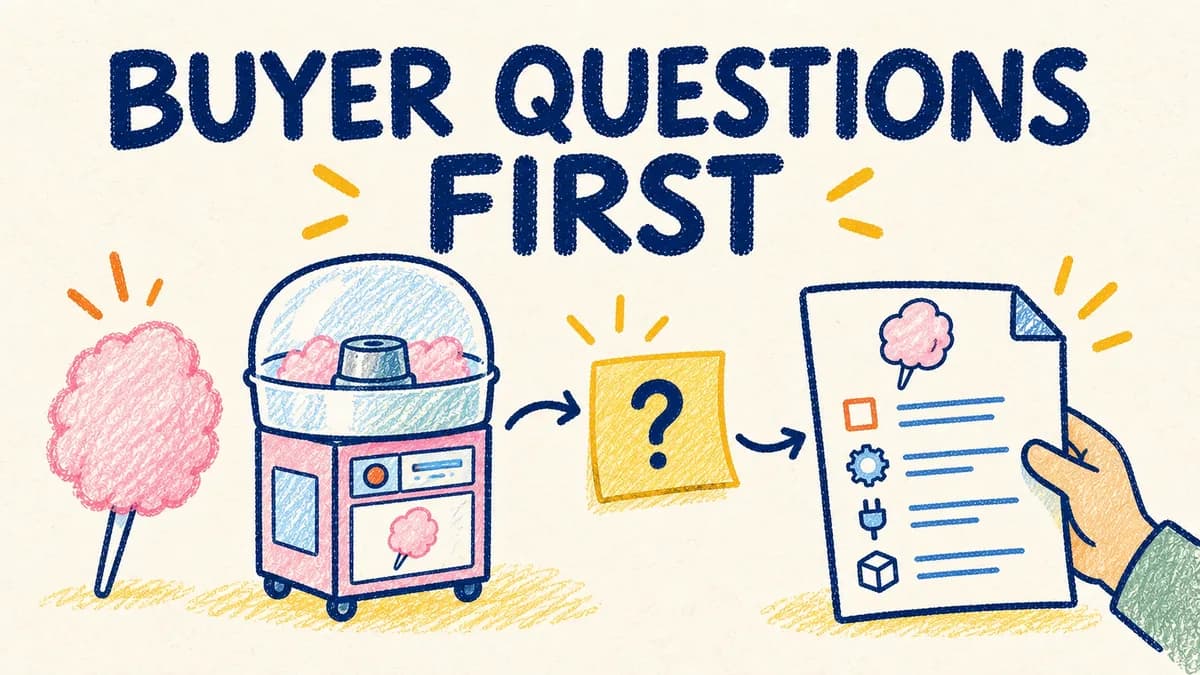
Before someone buys a cotton-candy machine, they need to know how much work it takes to run. Does a person prepare each serving, or can the machine run unattended? If the search description says one thing and the product page says another, the buyer still has a basic question to settle before asking for a quote.
We found that kind of question while reviewing Magics Group, a vending-equipment website with cotton-candy and other automated retail products. Our September 24, 2026 SEO and GEO audit focused on US buyers searching in English. We checked the public pages, the buying questions they answered and a set of controlled AI-search samples, then worked out what should come first.
This is a diagnostic case, not a growth-results case. It shows our audit and recommendations. Implementation, changes in search visibility and commercial outcomes have not been verified. Competitor identities are withheld from this public version.
We'd settle the product facts first
On the MC Mini Pro page, we flagged a fully-automatic description alongside a semi-automatic heading. We also found specification differences that needed an answer from the product team. These are dated audit observations; the site may have changed since then. The product page still used a semi-automatic heading when we rechecked it for this case.
We'd ask the product team to settle the specification before rewriting the page. A different configuration or shipping weight might explain a mismatch. We can't choose the correct figure from the page alone, and we wouldn't guess just to make the copy look tidy.
Then we'd explain how the machine runs: where a person is needed, what needs refilling and how cleaning works. A buyer should be able to follow that process. Once the facts are confirmed, the heading, search description, specifications and sales material should agree.
Help buyers reach the page that answers their question
Someone buying for a staffed event needs different information from someone planning an unattended location. We mapped those decisions to existing pages. We didn't need a new article for every way a buyer might phrase the question.
| Buyer decision | Page and facts to confirm |
|---|---|
| Which cotton-candy model fits the use case? | Category page: explain the model choices and send the buyer to the relevant product. |
| Can this model run at an unattended location? | Machine page: operator involvement, replenishment, cleaning and service requirements. |
| Will a compact model suit a staffed event? | Event-model page: setup, handling, power and the work required for each serving. |
| Am I buying equipment or replacement supplies? | Separate destinations: make the purchase type and next enquiry step unambiguous. |
We also flagged category wording and search text that didn't match the product on the page. What a buyer sees before and after the click should agree. Future articles can then support the right product page instead of answering the same buying question somewhere else.
We used AI answers to see what needed a closer look
For the GEO review, we repeated a fixed set of English buying questions through search-enabled APIs. Some cotton-candy answers linked to the Magics Group website. Questions about purchasing and maintenance gave us other areas to examine on the site.
We recorded a brand mention separately from a linked website citation. Saying a company's name, linking to its product page and leaving it out are different results. None establishes a general probability that customers will see the company.
These were API observations, not signed-out consumer-browser results. They don't establish visibility in Google AI Overviews, the ChatGPT website or the Perplexity website. Google AI Overviews was not verified in this audit. Repeating a question helps us see variation in the sample; it doesn't turn those answers into independent customer searches.
When another provider appeared, we looked at the page behind the link. Did it help a buyer understand running costs, refills, maintenance, warranty or support? That helped us identify missing explanations. It didn't tell us that the other company had better equipment or more sales.
What we'd put in the team's work queue
We tied each finding to a page and a check. Product facts came first because the copy depends on them. Titles, descriptions and leftover category wording came next. After that, we'd fill the purchasing and support gaps on the pages buyers already needed.
We'd confirm US delivery, training, warranty and support with the business before writing an assurance about any of them. A competitor's promise isn't evidence that this company offers the same thing.
We also recommended checking the contact route, how the pages could be crawled and whether structured information matched the visible facts. Google's AI-features guidance says the usual SEO foundations apply to AI Overviews and AI Mode. Special markup won't make an unreliable product explanation reliable, or guarantee a citation.
Once implementation starts, the weekly update should show the business what changed and what we've checked. Putting a task in a report doesn't mean the website has been fixed. We'd check the live page before marking it done.
What we'd need to check next
Next, we'd need the approved product facts and the agreed changes online. We'd check those pages, then look at search performance with access to the appropriate records and enough time to observe it. AI citations, website visits and qualified enquiries would still be measured separately.
We didn't have access to the company's Search Console or Analytics, and no before-and-after growth result is claimed. What we delivered was a diagnosis the team could work with: the facts to confirm, the pages to improve and the checks to make before adding more content.
For another equipment business entering the US or Canada, we'd start with its products, market and language. This case shows how we approached one audit. We'd want that business's own evidence before recommending the same work.
Related reading and sources
Read next on MAXUOD
What should your website fix first?
Send us your website, target market and language. We can look at the questions your buyers need answered, then agree on what to investigate or fix first.