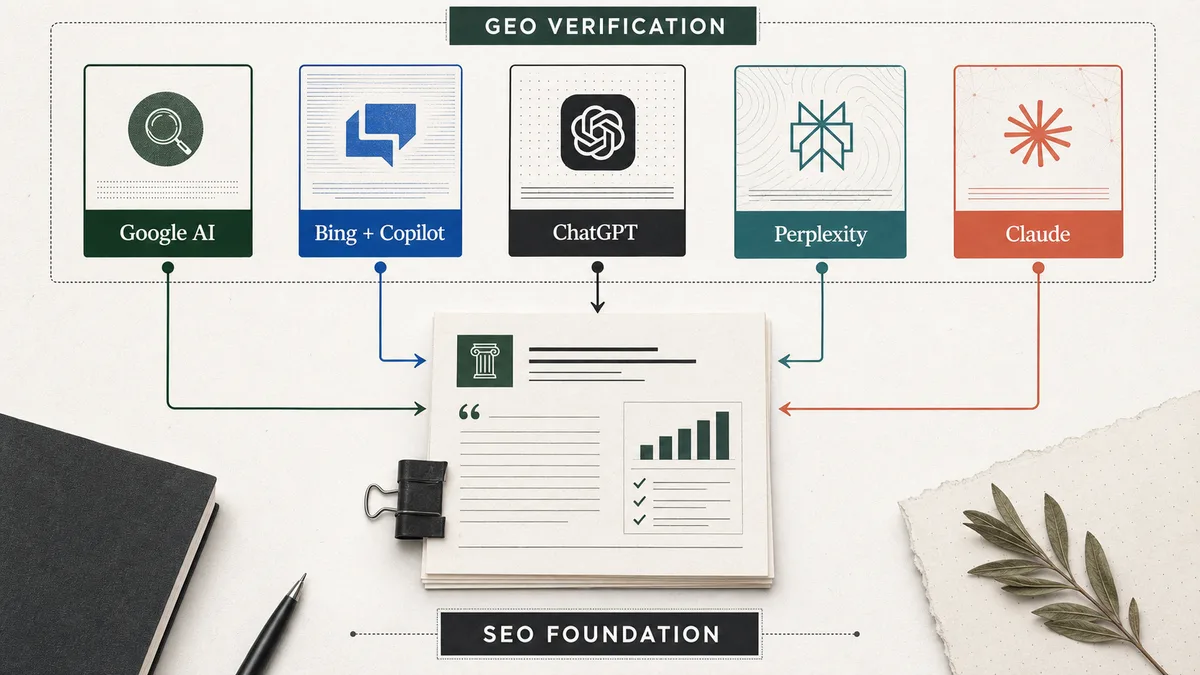
By August 8, 2026, MAXUOD Shift had crossed its first 10,000 cumulative Google Search impressions. This case records the concentrated month of SEO and GEO work around that milestone: clearer product pages, defined owners for useful search tasks, Canadian resources and release checks. The property total covers a wider period. It is not a before-and-after result for that month, and it does not isolate the effect of any one change.
This is a self-case, not an independent client testimonial. MAXUOD owns and operates Maxuod Shift, so we had access to the website, release history, and Google Search Console property. The product site existed before the sprint; the concentrated SEO/GEO work did not start on day one.
Canada was the only target market. The page architecture, tools, examples, language, and source choices were designed for Canadian small businesses and restaurant operators. We did not broaden the strategy to global or general North American demand simply to make the available market look larger.
Result boundary: the 10K figure is a cumulative, property-level Google Search Console impression milestone recorded by August 8, 2026. It is not 10,000 visits, leads, or impressions generated exclusively inside the latest 28-day window.
The first job was to make the product legible
A young product site often tries to explain everything from the homepage. That creates a weak search system: one page carries the brand, product, features, industries, templates, questions, and conversion path, while search engines receive few clear signals about which URL should answer which task.
We started with the same work we would use for a client: inspect crawl and index conditions, map customer intent to page owners, identify missing decision paths, and define what would be measured after each release. Technical SEO was the entry requirement, not the entire strategy.
That distinction matters. Google describes SEO as helping search engines understand content and helping users decide whether to visit. Its current guidance for generative AI search also keeps the same foundation: useful original content, clear technical structure, crawlability, index eligibility, and normal Search measurement remain central.
We built useful entry points, not a page factory
The growth layer combined product pages with task-completing resources for the Canadian market. A scheduling tool, calculator, template, or Canadian workplace guide can earn discovery because it helps someone finish a real job. A service or feature page can then explain where the product fits and what the user should do next.
We did not create a separate page for every keyword variation. The operating rule was simpler: one primary intent, one useful owner, and supporting internal links where the next task genuinely changed. New pages had to add a tool, a decision, a local operating context, or evidence that the existing owner could not provide.
This is how MAXUOD approaches content strategy for clients. Keyword research starts the conversation, but page ownership, usefulness, implementation quality, and measurement decide whether a URL belongs in the site.
GEO meant clearer evidence, not tricks for AI
Our GEO premise is not to trick an answer engine. It is to make the business, product, audience, and supporting evidence easier for search and AI systems to retrieve, understand, and represent accurately.
For Maxuod Shift, that meant clarifying the product category and Canadian context, keeping important facts consistent, answering real Canadian buyer and operator questions, placing sources beside consequential claims, and making each important page understandable outside the navigation that led to it.
We also extended measurement through our GEO Proof Lab. Instead of treating one AI answer as a ranking, we use a fixed question set to observe whether the brand, its pages, and category competitors such as Homebase appear across selected answer surfaces. Mentions, citations, referrals, and conversions remain separate evidence. The output is a direction for the next release, not a promise that an opaque model will repeat the same answer.
What MAXUOD delivered behind the milestone
- Analysis: inspect the technical foundation, current pages, search intent, business model, and measurement gaps.
- Prioritization: choose the smallest set of pages, tools, content updates, and internal links that can complete a customer task.
- Implementation: write, build, connect, and release the changes instead of stopping at a spreadsheet of recommendations.
- SEO and GEO verification: confirm crawl and index conditions, review Search Console evidence, and sample AI-answer visibility without mixing the metrics.
- Next decision: keep, improve, consolidate, or stop based on what the released work actually shows.
Tools can produce keywords, audits, drafts, and visibility samples. MAXUOD’s service is the connected operating loop: deciding which signal matters for the business, implementing the right change, verifying the release, and assigning the next owner.
We rejected the shortcuts that would weaken the case
We could have published far more pages. We could also have reported every AI mention as a GEO win or blended visibility signals and enquiries into one impressive-looking score. Both choices would make the story easier to sell and harder to trust.
Our default is to protect one intent owner, publish when a page has distinct value, and keep each measurement in its own lane. If a future site has verified demand across many locations, languages, or product categories, a larger architecture may be justified. Scale should follow evidence and operating capacity, not precede them.
What the 10K milestone proves, and its limits
The milestone documents an early search footprint for a MAXUOD-owned product. The implementation record shows how we connected technical checks, task-owning pages, useful assets and source review. Those are two different kinds of evidence: the cumulative impression total does not prove that the sprint—or the GEO work specifically—caused the milestone.
It does not prove that the same actions will produce the same number for another business. Market demand, competition, site history, offer quality, release capacity, and measurement coverage all change the outcome. Search impressions are an early visibility signal, not revenue.
The next phase for Maxuod Shift is not “more content at any cost.” It is improving the pages already earning discovery, strengthening product-to-question coverage, checking how the brand is represented across relevant AI answers, and connecting visibility to product use and qualified outcomes.
Need a clearer search and AI visibility path for your business? MAXUOD can inspect the site, map the opportunity, implement the priority work, and build a measurement loop without promising a copied result.
Case-study note: Google Search Console evidence was checked on August 10, 2026, with complete data through August 8. Search performance can change, and impressions do not guarantee traffic, rankings, AI citations, enquiries, or revenue. Google and Homebase names and trademarks belong to their respective owners.
Related reading and sources
Read next on MAXUOD
External references
Build a search system your team can verify
MAXUOD connects technical SEO, page strategy, useful assets, GEO clarity, implementation, and measurement around your actual market and offer.