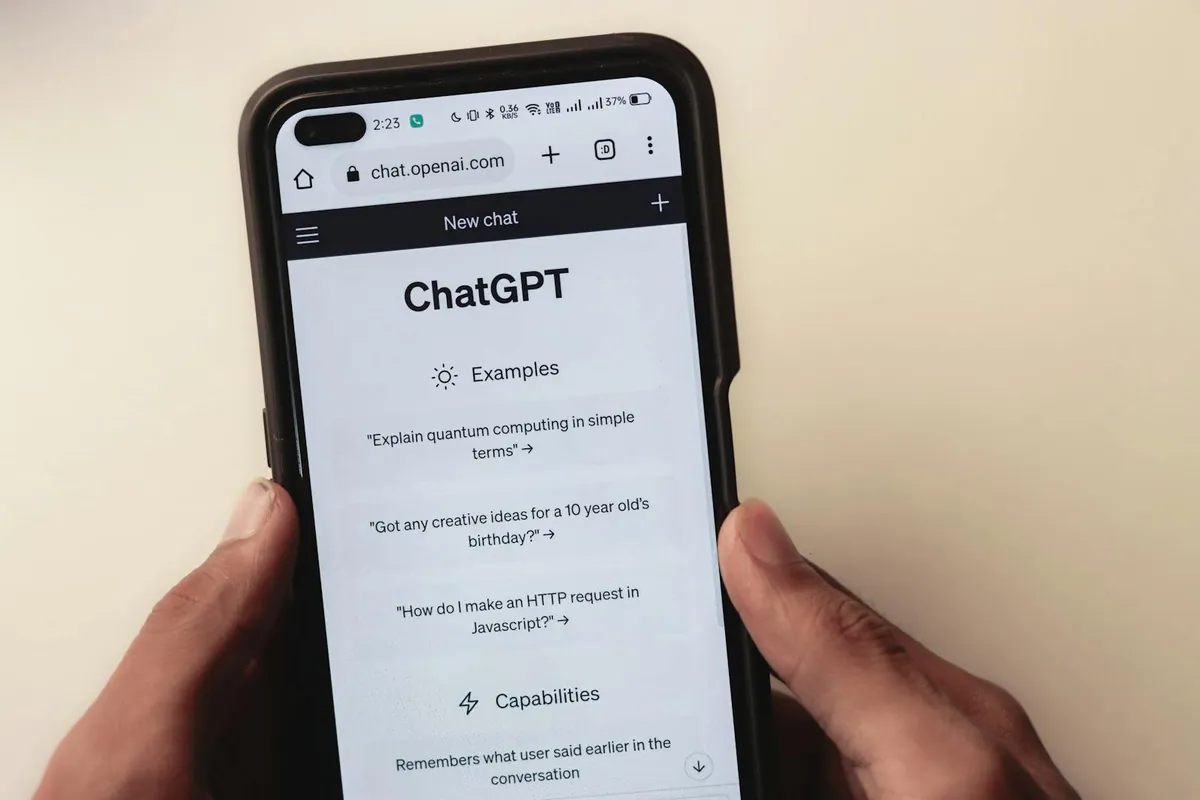
Google Search can now build some interactive tools inside the answer. That makes a generic calculator easier to replace. It does not make every free business tool obsolete.
The useful dividing line is not “AI-generated” versus “website-built.” It is how much of the result depends on context the answer surface does not have. A public formula is easy to reproduce. An approved business diagnosis, an accountable recommendation, or a workflow that leaves the user with a usable handoff is harder to collapse into one response.
For a Canadian small business deciding what to build next, we would stop counting tool launches and inspect the customer task. If the tool only rearranges public inputs, it needs a stronger reason to exist. If it helps the customer apply private facts, make a risky decision, or continue work after the answer, it still has a job.
Google changed the answer surface, not the whole business case
On August 19, 2026, Google said its Generative UI capabilities had launched globally in English in AI Mode and had started rolling out in AI Overviews. Google's examples include a customized pH visual, an interactive quiz, and custom file creation. Earlier Search announcements also showed a generated loan calculator and simulations built for a specific question.
Those examples establish a capability: Search can assemble an interface instead of returning only prose and links. They do not establish that every calculator page will lose traffic, that every generated interface will satisfy commercial intent, or that Canadian buyers will stop visiting specialist websites.
Google still places links to web sources in these experiences, and its current AI-search guidance keeps normal SEO foundations in place. Useful, original pages still need to be crawlable, index eligible, understandable, and built for people. No special AI file or duplicate “GEO version” is required.
Recurring tasks create a second product boundary
Google's May 19 Search announcement described information agents that monitor changing sources and generated interfaces that can persist as dashboards or trackers. That is a product direction to evaluate, not proof that every account or market has the same monitoring controls today.
Canada appears in Google's current AI Mode availability list. General AI Mode access does not establish account-level monitoring access, notification delivery or an outbound source link. Record each of those states only when observed. We have not validated a Canadian monitoring task for this article.
This changes the free-tool decision in one specific way. A one-off utility competes with a generated interface. A saved alert or recurring list can now also compete with a monitoring task. An owned tool still earns its place when it preserves approved business context, produces an export or handoff, or connects the alert to a workflow the user controls.
A generic answer and a business tool complete different jobs
A mortgage formula can produce a number. A lending decision needs rates, product terms, eligibility, fees, taxes, risk tolerance, and professional boundaries. A colour-contrast checker can return a ratio. A website release still needs component changes, design-system ownership, browser testing, and verification. The calculation may be the shortest part of the work.
This distinction matters for lead magnets. A weak tool gives a generic output, withholds the useful part, and asks for an email. A strong tool completes a bounded task, shows the limit of that result, and gives the user a sensible next decision. The contact request follows the value instead of substituting for it.
Route the tool by what makes it difficult to replace
Public formula: keep only when the experience adds something
A simple calculator remains useful when people return to it, when the business maintains a trusted public dataset, when the interaction is faster than describing the task in a prompt, or when the page earns branded discovery. But another generic percentage, word-count, or score widget is a weak default.
If Search can reproduce the same result from public inputs, the page needs a second asset: a maintained benchmark, a printable record, a comparison the user can inspect, or a clear implementation path. Without one, improve an existing owner instead of creating a new tool URL.
Private-context diagnostic: deepen the input contract
A website audit, forecast, or account review becomes more useful when it can inspect approved information specific to the business. The value comes from applying that context, not from hiding a public answer behind a form.
Ask only for information the task requires. Explain what is fetched, what is stored, who can access it, and what the output cannot decide. A free tool does not earn permission to collect every possible field. For Canadian users, privacy and consent decisions also depend on the organization, jurisdiction, purpose, and data flow; obtain qualified advice for a legal assessment.
Accountable judgement: show the decision and its owner
Some outputs look like scores but are really recommendations. Which page should own a topic? Is a schema warning material? Should a location page be merged, improved, or left alone? A model can organize evidence. Someone still has to accept responsibility for the recommendation and name the condition that would change it.
Here, the useful lead magnet is often a small diagnostic with a human-reviewed priority, not a larger automated report. One justified next move can be more valuable than 80 unranked warnings.
Continuing workflow: leave an artifact the user can carry forward
The strongest tools do not end at the answer. They create a brief, export, change log, test record, implementation ticket, or saved workspace that another person can use. The user leaves with work that survives the session.
This is where an owned tool can beat an on-the-fly interface. It can preserve approved context, maintain version history, connect to a real release process, and support the next review. The advantage is continuity, not decorative AI.
Apply the framework before building another free URL
We would put a proposed tool through five decisions:
- Name the completed customer task. “Get leads” is a company goal, not the user's task. “Identify the first indexation blocker” or “prepare a reviewable article brief” is testable.
- Separate public from contextual value. List what any answer engine can derive from public information, then list the approved business inputs, judgement, or follow-through the tool adds.
- Choose the artifact. Decide what the user can save, share, implement, or compare after the session. A score alone is rarely enough.
- Place the contact step after value. Collect only the details needed for the promised continuation. State what happens after submission.
- Define a stopping rule. Retire or merge the tool when it attracts the wrong task, produces outputs the team cannot support, or duplicates an answer the main owner already handles better.
This review protects the site from becoming a shelf of almost-identical utilities. It also makes the remaining tools easier to explain, link, measure, and maintain.
How MAXUOD applies the distinction
MAXUOD's public Free SEO Writer starts with a public website, orders content opportunities, and produces a reviewable draft. Its useful boundary is the page decision and handoff: a person still approves the business facts, source quality, owner URL, and release.
The Free SEO and GEO Audit serves a different job. It asks for a small set of business details so the site can be reviewed in context and a next priority can be proposed. It should not pretend that a universal score is the diagnosis.
GEO Proof Lab is an internal evidence method, not another public free-tool promise. It freezes a prompt cohort, separates answer surfaces, records cited sources, and supports later comparison. A sampled mention is not traffic, a lead, or a guaranteed future answer.
The common service layer is analysis, prioritization, implementation, verification, and measurement. Self-service is enough when the user can approve the facts and complete the release. A focused project is useful when the evidence conflicts, the recommendation carries business risk, or several owners need a clean handoff.
Measure task completion before lead volume
A lead magnet can generate form submissions while disappointing every user. Track the work in order: discovery, tool start, successful completion, artifact use, optional unlock, next-action click, contact, and manually qualified enquiry. Keep failures and return use visible too.
Do not merge these stages into one conversion rate. A successful tool run records completion under the tool's definition. An email address is contact data; collecting it does not automatically authorize unrelated marketing or a wider use of the result. A qualified enquiry requires a separate business review. The MAXUOD reporting guide keeps those evidence layers separate.
The default: fewer tools, deeper jobs
AI Search will make some public utilities easier to reproduce inside the result. Our response is not to gate more aggressively or build a louder calculator. We would keep the tools that apply approved context, make a bounded decision, or carry work into the next owner. We would merge or stop the ones that only restate a public formula.
A simple tool can still win when the experience, dataset, brand, or repeat workflow gives people a reason to return. If later evidence shows that users prefer the generated interface and no longer complete the owned tool, change the plan. Until then, treat Generative UI as a product-design signal, not a traffic obituary.
Platform and service note: Google's primary announcements and general AI Mode availability were rechecked October 11, 2026; no account-level monitoring run or lead-magnet traffic effect was tested. Rollout, interface, language, and availability may change. General AI Mode availability is not proof of account-level monitoring access or source-link behavior. This article states MAXUOD's professional view for educational purposes and does not promise traffic, rankings, AI citations, leads, or a specific privacy or legal outcome.
Related reading and sources
Read next on MAXUOD
External references
Does your free tool complete a job or only collect a lead?
MAXUOD can inspect the task, evidence, data boundary, handoff, and measurement path, then recommend whether to keep, deepen, merge, or stop the tool.